Appearance
The detector & a real event
ColliderML is full-detail simulation of the Open Data Detector (ODD) — a realistic, openly-available HL-LHC-class detector. Below: the detector itself, then a live, interactive view of a genuine simulated event from the dataset.
The Open Data Detector
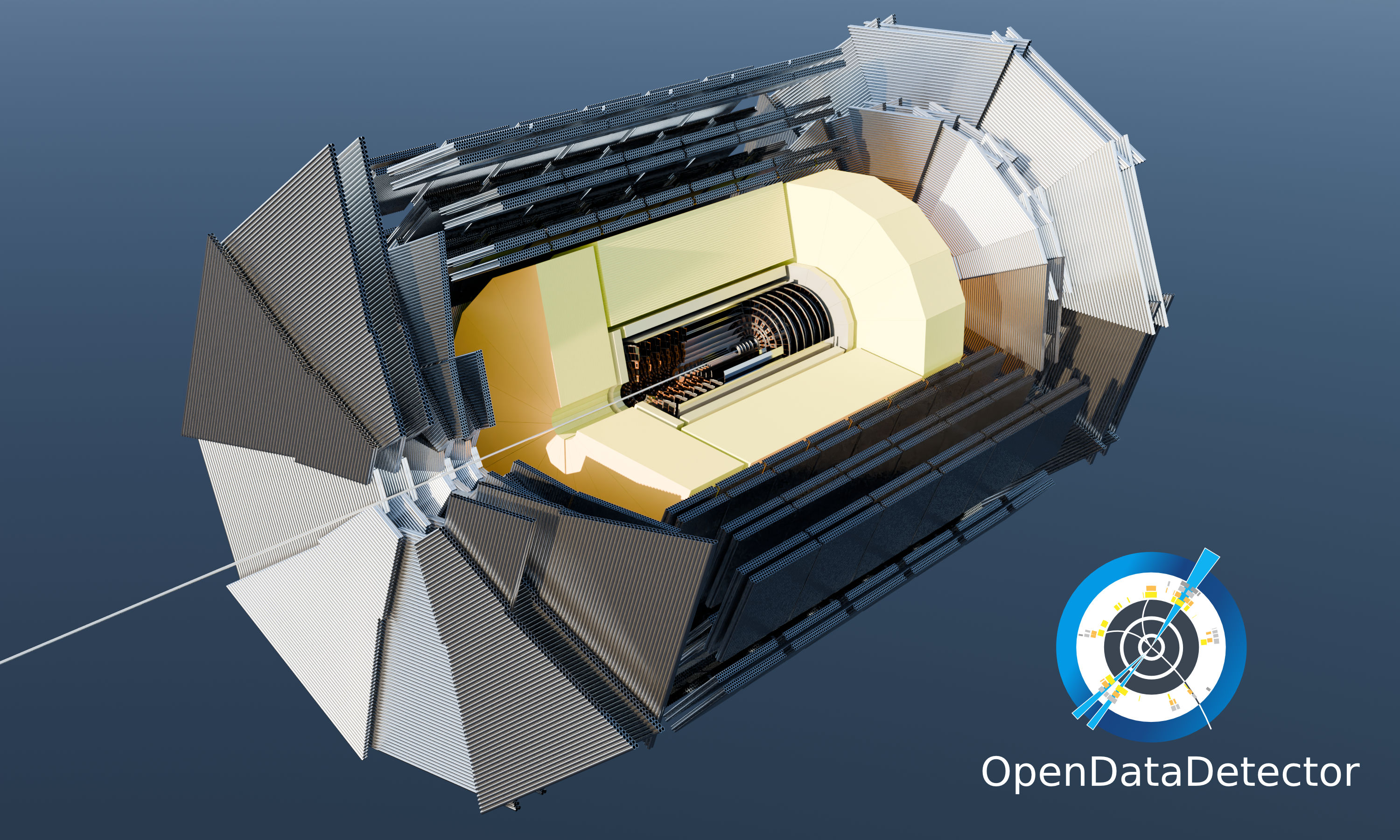
The full ODD: silicon tracker at the core, electromagnetic and hadronic calorimeters (cream), surrounded by the muon system.
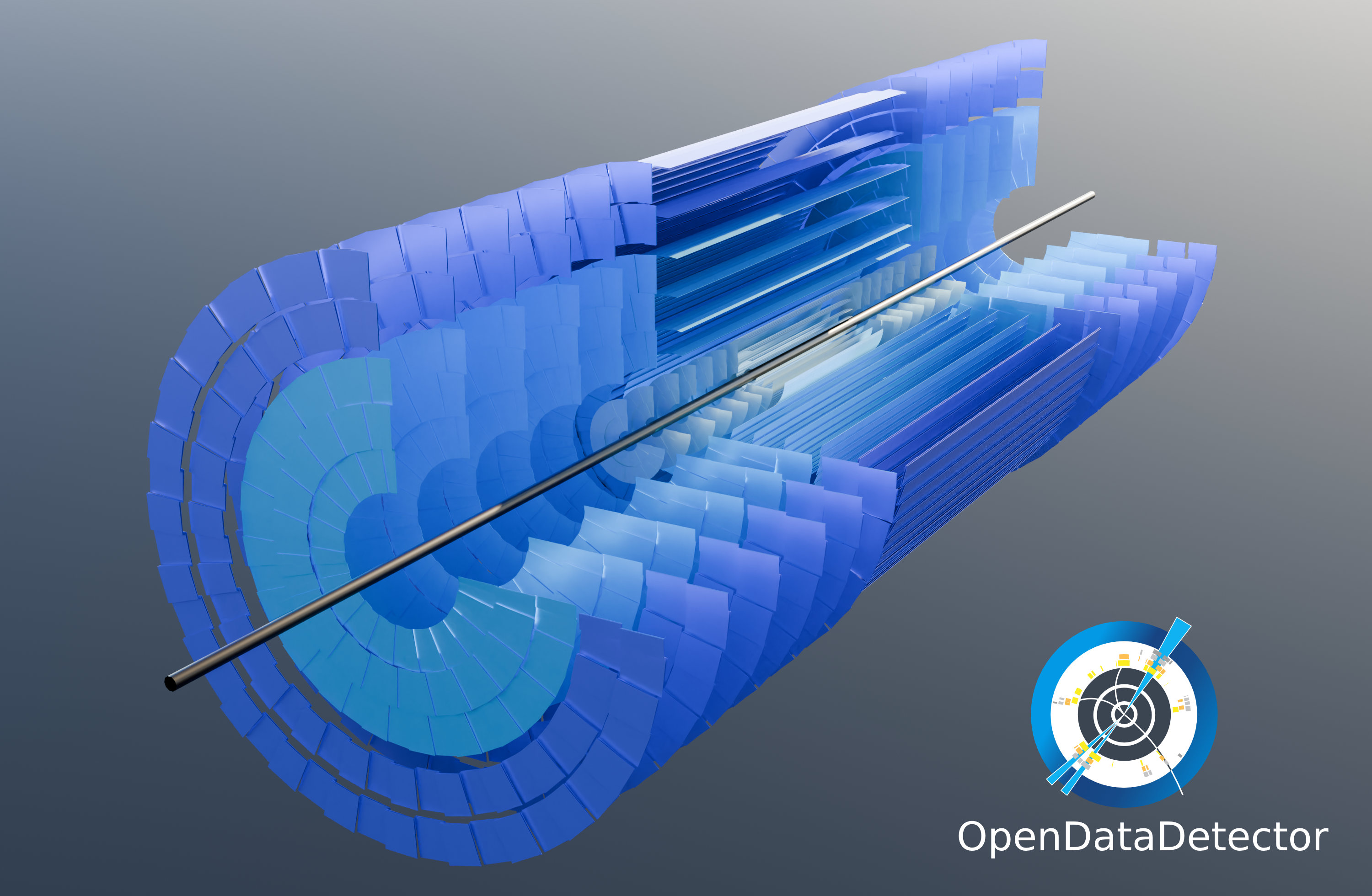
The silicon tracker — pixel and short/long-strip layers across barrel and endcaps. This is where tracker_hits are recorded.
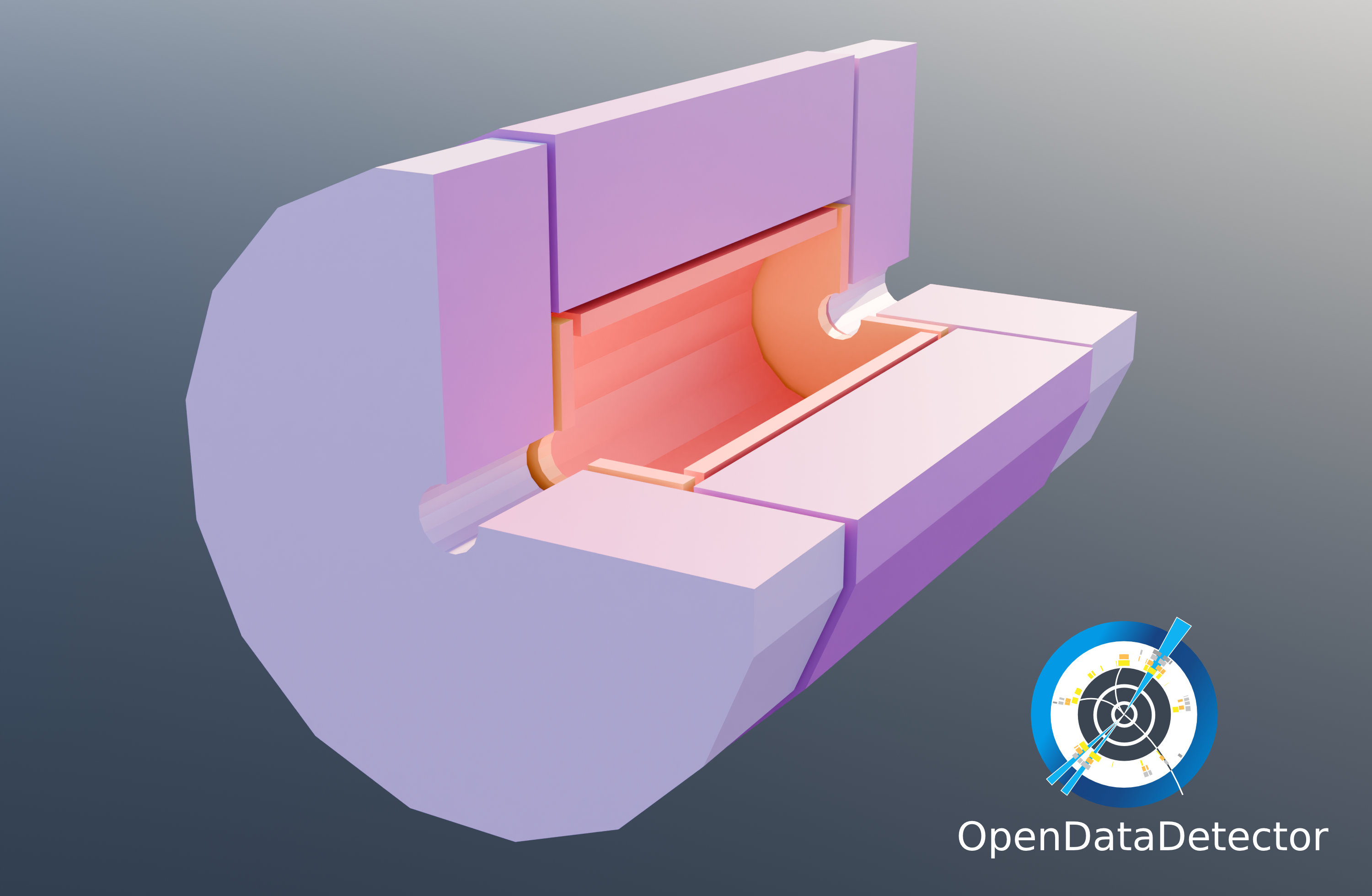
The calorimeter and solenoid in cross-section — the EM and hadronic calorimeters that produce the calo_hits energy deposits.
Explore a simulated event
A real ttbar event from ttbar_pu0, rendered in your browser: reconstructed tracks, calorimeter energy deposits, raw tracker hits, and clustered jets (anti-kT, R = 0.4). Drag to orbit, scroll to zoom, and use the controls to switch events and toggle layers.
Powered by hep-viz
The event display embeds hep-viz (F. Wilson & G. Facini, UCL — 10.5281/zenodo.18387794, MIT), a Three.js HEP event display built for ColliderML data. Here it runs fully client-side over pre-exported events — no backend required. To explore the whole dataset interactively, pip install hep-viz and run hep-viz view <data-dir>.
Citing hep-viz
If you use the event display in your work, please cite hep-viz:
bibtex
@software{hepviz,
  author    = {Wilson, Finnbar and Facini, Gabriel},
  title     = {hep-viz},
  version   = {0.1.5},
  publisher = {Zenodo},
  year      = {2026},
  doi       = {10.5281/zenodo.18387794},
  url       = {https://doi.org/10.5281/zenodo.18387794}
}
Credits
Detector renders: the Open Data Detector project.